Compare by job
A RunningHub AI models list turns vague browsing into a concrete choice: image quality, video motion, language reasoning, or workflow composition.

Model directory · capability split
This RunningHub AI models list gives you a practical way to separate image, video, language and workflow tools before you start. Instead of scanning a crowded catalog, compare what each model is built to do, where it fits, and how to begin without overcomplicating the first prompt.
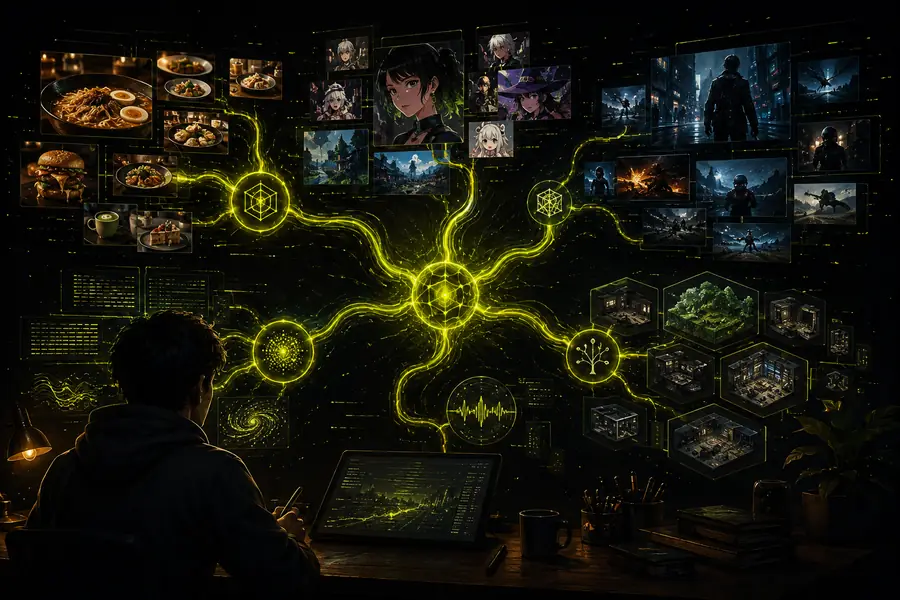
A model choice is easier when the desired output comes first: image, motion, language, or a repeatable chain of steps.
| Attribute | Models list entry point | General RunningHub AI entry point |
|---|---|---|
| Best first question | Which capability fits? | What should I create? |
| Primary focus | Model discovery and comparison | Open-ended creation |
| Useful for | Shortlisting tools quickly | Starting from a blank canvas |
| Output planning | Capability-first | Prompt-first |
| Workflow depth | Highlights connected options | Leaves the route open |
| Ideal visitor | Someone deciding what to use | Someone ready to experiment |
Decide whether the job needs a still image, moving sequence, written direction, or a connected workflow.
Use the list to narrow the field, then compare motion, detail, language, editing, or automation strengths.
A small, specific test reveals more than a broad prompt with too many competing requirements.
Capability split
The broader RunningHub AI canvas is designed for making. This route is designed for deciding, so it emphasizes distinctions that are easy to miss when every model appears in one long catalog.
A RunningHub AI models list turns vague browsing into a concrete choice: image quality, video motion, language reasoning, or workflow composition.
It makes the relationship between a single model and a larger process easier to understand, especially when a still becomes a video or a prompt becomes a reusable chain.
Instead of testing unrelated tools one after another, you can enter with a shortlist and reserve experimentation for the models most likely to fit.
A focused first pass
Begin with a single creative outcome and use the RunningHub AI models list as a filter, not a checklist. If you need a poster, start with an image-capable route. If the idea depends on camera movement, expressions, or sound, look toward video. If the work repeats across inputs, a workflow is likely the better destination.
For deeper process guidance, the RunningHub AI workflow guide explains how to connect stages instead of treating every generation as a one-off. For visual work, the image generation route gives a narrower starting point.
Try a focused prompt
Name the subject, style, lighting, framing, and the output format you actually need.
Choose a model that can sit cleanly inside the next step, not just produce an attractive first result.
Honest selection criteria
A model directory helps you choose, but it cannot remove the trade-offs that come with generation. These limits are normal; the useful part is knowing what to do next.
High-detail image or video generation can require more attempts and more deliberate prompting than a quick draft.
Workaround: use a faster model for composition tests, then move the winning prompt to a quality-focused option.
A great still-image model may not be the right choice for temporal consistency, sound, or structured text.
Workaround: split the job into stages and connect them through a workflow.
A list can point you toward the right capability, but it cannot decide the subject, framing, tone, or constraints for you.
Workaround: describe the desired output in concrete visual or functional terms.
Model catalogs evolve, and a current capability label should be treated as a starting guide rather than a permanent guarantee.
Workaround: test a small representative prompt before committing to a larger batch.
Answers before you choose
These answers address the practical questions people ask when they are trying to understand model categories, availability, and the right first step inside RunningHub AI.
The list is a capability guide for the main types of creative tools available through the platform: image generation and editing, video creation, language support, and connected workflows.
Choose image models when the result is a still asset such as a poster, product frame, or concept image. Choose video models when movement, timing, transitions, performance, or sound are part of the brief.
Yes. A single prompt is a sensible way to test a model and understand its output. Build a workflow when you need consistent inputs, multiple stages, or a process you plan to repeat.
Use one representative prompt, keep the desired format clear, and judge the result against the actual task rather than against a completely different model category.