Vague prompts create noisy tests
If the subject, camera, style, and intended format are all unspecified, several outputs may look plausible without being useful.
Workaround: define one subject, one mood, and one visual action per first pass.

Access and usage guide
Runninghub ai pricing is easiest to understand as a question of access, workflow complexity, and the kind of output you need. This guide explains what to prepare, what a typical free creative run looks like, which options matter, and where the experience can slow down.
You do not need to begin with a large production plan. Start with a clear prompt, a reference image if useful, and enough time to compare variations. The same approach also makes RunningHub AI online free easier to evaluate before you commit to a repeatable workflow.
Choose one visual goal, describe the subject and mood, and decide whether the first pass is an image, a short video, or a connected workflow.
Use a small set of variations to check composition, style, motion, and consistency instead of spending effort polishing a weak direction.
Save the prompt structure and settings that work. A reusable process is usually more valuable than a single successful generation.
Continue the research
Plans questions often overlap with availability and capability questions. If you are deciding whether to start now, compare RunningHub AI online free access first, then review the RunningHub AI workflow guide if you need repeatable multi-step production.
A realistic first session
A sensible way to assess RunningHub AI pricing is to follow one complete creation cycle rather than compare isolated feature claims. Begin with a short brief: “a premium skincare bottle on wet black stone, soft lime edge light, slow camera move.” Generate a few image directions first. If the composition is promising, keep the strongest frame as a visual reference and move into motion. Review the result for subject consistency, pacing, and whether the output matches the intended format. If it does not, change one variable at a time. This makes the real cost of experimentation visible without turning the first session into a complicated production exercise.

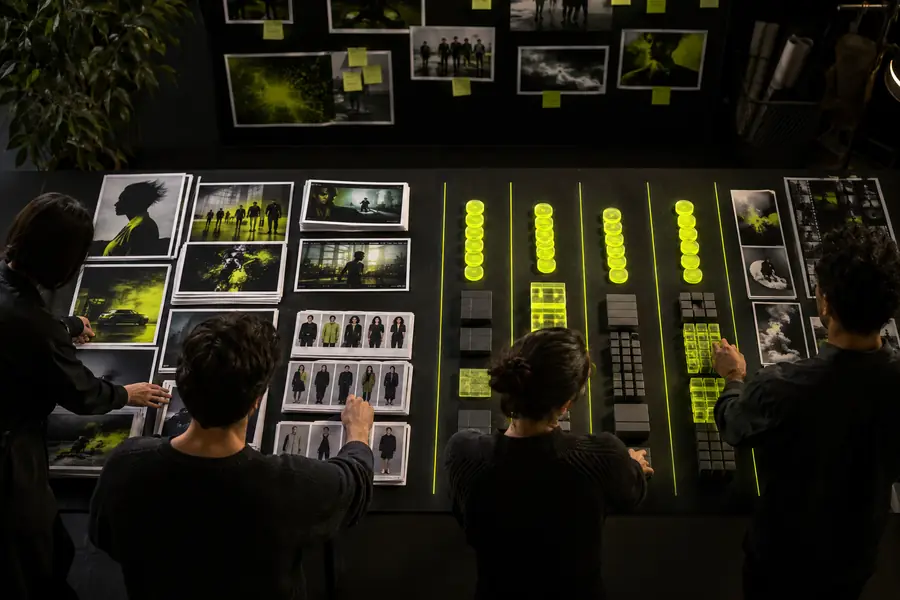
The useful comparison is not simply first image versus final image. It is whether a focused brief, a small number of tests, and a saved workflow reduce wasted iterations. That is the practical lens for RunningHub AI pricing.
Choose the lightest path that works
Most friction comes from unclear inputs, ambitious combinations, or expectations that every model behaves the same way. These are the boundaries worth planning around before you judge a pricing option.
If the subject, camera, style, and intended format are all unspecified, several outputs may look plausible without being useful.
Workaround: define one subject, one mood, and one visual action per first pass.
Connected image, video, and enhancement steps can be more capable, but they also create more places for settings or inputs to drift.
Workaround: validate each stage separately before chaining the full process.
One model may handle text, faces, motion, or product details better than another, so a single universal expectation can mislead.
Workaround: use the RunningHub AI models list to match the task to the right capability.
Compare the practical choices
There is no single answer to RunningHub AI pricing because the useful option depends on whether you are exploring, refining, or building a repeatable process. This table separates the common paths without presenting a commerce screen or assuming one fixed rate.
| Attribute | Free exploration | Structured creation |
|---|---|---|
| Best for | Trying prompts and comparing directions | Repeatable image, video, or workflow production |
| Starting requirement | A prompt and a clear visual goal | A brief, references, and a defined output format |
| Iteration style | Small batches and quick checks | Planned variations with saved settings |
| Workflow depth | Single-step or lightweight experiments | Connected stages with reusable inputs |
| Primary trade-off | Less control over long production sequences | More setup and more variables to validate |
| How to judge value | Quality of the first useful direction | Consistency, speed, and fewer repeated decisions |
A clearer way to measure value
The most useful RunningHub AI pricing comparison is based on how quickly you reach a usable result, not only on the number attached to an individual generation. These checkpoints help keep the evaluation grounded.
Questions before you start
RunningHub AI can be approached as a free exploration tool for testing creative directions. Availability, limits, and model access can change, so use a small real task to confirm what is available when you visit.
Prepare a concise prompt, a reference image when consistency matters, and a clear output format. Comparing the same brief across options gives a more useful result than comparing unrelated generations.
No. A connected workflow is worthwhile when it removes repeated work or improves consistency. For a simple image or short test, a lighter path may be faster and easier to evaluate.
You can begin with prompts and ready-made creative directions without building a technical graph from scratch. If you want a deeper comparison, the RunningHub AI vs ComfyUI cost guide explains the different kinds of effort involved.
Who benefits from a clear starting path
Test a visual idea quickly, keep the strongest prompt, and avoid building a large process before the concept proves itself.
Explore RunningHub AI online freeMove from a product reference to several campaign directions while keeping the visual brief consistent across iterations.
Review free image generationConnect stages only after each input and output is understood, making the final process easier to repeat and debug.
Plan an AI workflowCompare capabilities by task, especially when image quality, motion, consistency, or language control changes the result.
Browse the models list